Is Your Inbox Ghosting Your Education? The Ultimate Guide to Email for Students in 2026
Is Your Inbox Ghosting Your Education? The Ultimate Guide to Email for Students in 2026
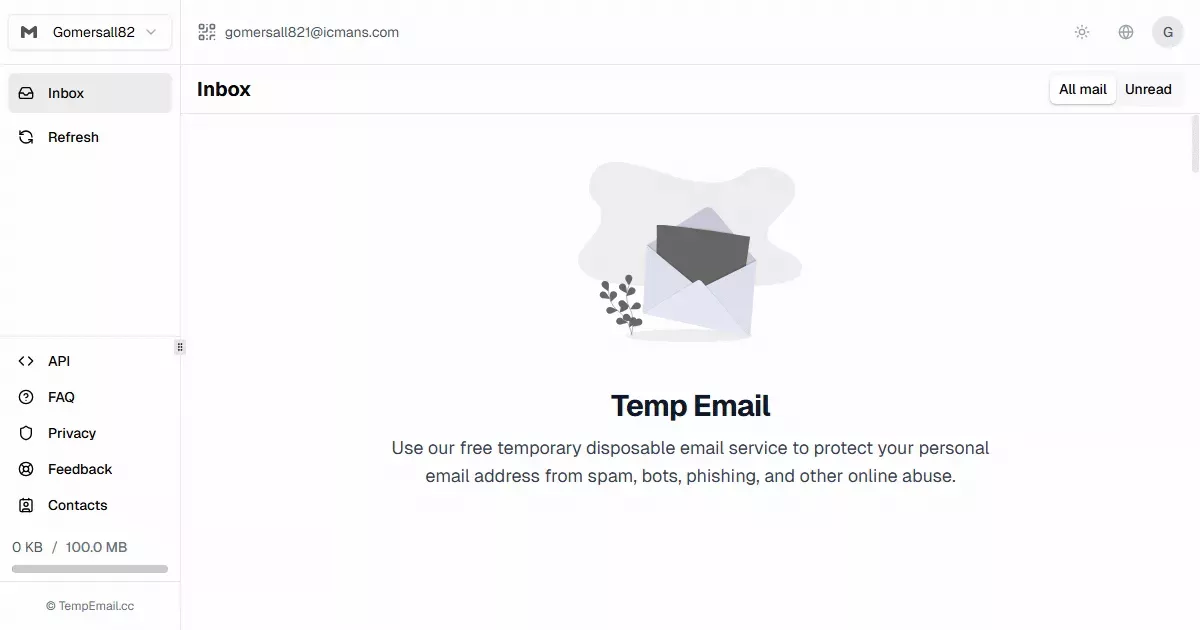
Imagine this: You’re frantically scanning your inbox for that critical feedback from your professor or an invitation for the internship of your dreams. Instead, you’re greeted by a mountain of "Special Offers!" from a textbook site you visited once, three newsletters you didn't mean to subscribe to, and a literal flood of promotional noise. It’s digital suffocating. In the fast-paced academic world, your inbox is your lifeblood, but it's quickly becoming a digital landfill.For today's learners, managing Email for Students isn't just about color-coding folders or hitting "In-box Zero"—it’s a survival tactic. It’s about building a fortress around your digital privacy and ensuring that when the "big news" hits your inbox, it doesn't get buried under a heap of marketing rubble. If you’ve ever hesitated before giving your university email to a random research site, this guide is your new best friend. Let's reclaim your focus.Why Every Student Needs Smart Email ManagementYour university email address (the one ending in .edu) is arguably your most valuable digital asset. It’s your passport to student discounts, library databases, and professional networking. However, every time you use that "official" identity to sign up for a random study app, a free citation generator, or a "discounted" pizza delivery service, you are essentially handing out your home keys to strangers.Consider the "digital footprint" problem. By the time you graduate, you might have registered for over 100 different platforms. If even one of those services suffers a data breach, your primary academic identity—the one you'll soon put on your resume—is compromised.Smart management of Email for Students means recognizing that not every website deserves your real name. By creating a strategic filter, you ensure that the high-signal messages (like grades and meeting requests) are never drowned out by low-signal noise (like Black Friday deals from a software company you tested once for a lab report).The Strategic Role of Temporary Email Addresses for StudentsThis is where the "Secret Sauce" of digital organization comes in: the Temporary Email Address. Think of it as a "burner phone" for your academic life. These aren't permanent accounts like your Gmail or Outlook; they are transient, short-lived inboxes designed to catch a single piece of mail and then vanish.For a student, a temporary email acts as a digital airlock. You need to download a whitepaper? Use a temporary address. Need a one-time verification code for a trial version of MATLAB or Photoshop? Use a temporary address. You get the resource you need, the verification happens in real-time, and then you close the tab.The beauty of this system is its "Set it and Forget it" nature. You don't have to worry about unsubscribing later because the address itself will eventually self-destruct. No traces, no tracking, and most importantly, no spam following you back to your primary academic inbox.Practical Academic Applications of Temporary EmailsHow does this actually look in the daily life of a student? It’s more practical than you might think.1. Accessing Research and Academic MaterialsWe’ve all been there: you found the perfect paper for your thesis, but it’s behind a "register to read" wall. You don't want to join their marketing list for the next decade just to read ten pages. A temporary email allows you to bypass the gatekeeper instantly. You get the PDF, and your primary inbox remains a "No-Fly Zone" for their sales team.2. Testing Educational Software and ToolsIf you’re a CS major, a designer, or a data analyst, you’re constantly "testing" tools. Whether it's a new IDE, a cloud platform, or a wireframing tool, these often require an account. Using a temporary email allows you to simulate user registrations and test the software's functionality without cluttering your personal space with "Welcome!" sequences.3. Protecting Your Primary Academic IdentityYour university email is your "Professional Brand." When you apply for a job or a PhD program, you want that address to be clean. If you've used it to sign up for every gaming forum and clothing brand under the sun, your "Sender Reputation" might actually take a hit. Using temporary layers keeps your professional identity pristine.4. Organizing Course-Related RegistrationsSometimes you only need a platform for one semester. Why keep that account tied to your main email forever? By using a temporary or secondary address for specific course requirements, you create an automatic "end date" for those communications.Key Features to Seek in Student-Friendly Temporary Email ServicesNot all "disposable" services are created equal. As a student, you need something that works faster than your 8:00 AM coffee kicks in. Look for these "Must-Haves":Zero Registration: If a temporary email service asks for your real email to sign up, they’ve missed the point. You should be able to land on the page and see your new address immediately.Reliability for Verifications: Some educational sites block certain domains. You need a service like tempemail.cc[https://www.tempemail.cc/] that uses high-quality domains that actually get through those "Strict" filters.The "Goldilocks" Duration: You don't want an inbox that dies in 60 seconds (what if the verification email is slow?). Look for a service that gives you at least a few hours of access.Clean Interface: You have enough distractions. You don't need a website covered in flashing ads. You want a simple, functional inbox.Building a Comprehensive Student Email StrategyTo truly master Email for Students, you need a "Layered Defense" strategy. One email address is no longer enough. Here is the blueprint for a 2026 digital setup:LayerPurposeExampleThe Vault (Primary)Official university business, internships, professors.student.name@university.eduThe Buffer (Secondary)Educational newsletters, LinkedIn, reputable student orgs.name.academic@gmail.comThe Shield (Temporary)Research walls, software trials, public Wi-Fi, coupons.x7k9p2m@tempemail.ccPro-Tip: The "Forwarding" Middle GroundSome savvy students use "alias" services that forward mail to their main account. This is great for things you might want to keep, but it’s still more work than a truly disposable address. For 90% of your "one-off" academic tasks, the Temporary Email Layer is the fastest and cleanest solution.Conclusion on Email for StudentsIn the modern academic landscape, your attention is your most limited resource. Every spam email is a tiny "attention tax" that you shouldn't have to pay. Managing Email for Students effectively is about drawing a line in the digital sand and saying, "This space is for my growth, not your marketing."By adopting a layered approach—using your university email for what matters and a service like tempemail.cc for everything else—you’re not just being "tech-savvy." You’re being professional. You’re ensuring that when you finally get that "Congratulations, you’re hired!" email, it’s the only thing waiting for you in your inbox.So, the next time a random site asks for your "student email," take a second. Open a new tab, grab a temporary address, and keep your academic identity for yourself.
Feb 26, 2026