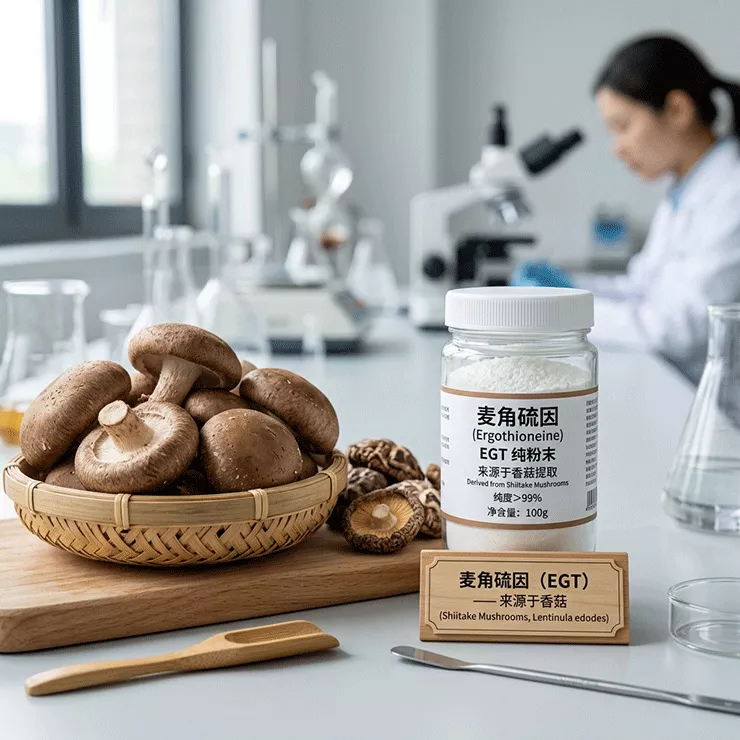
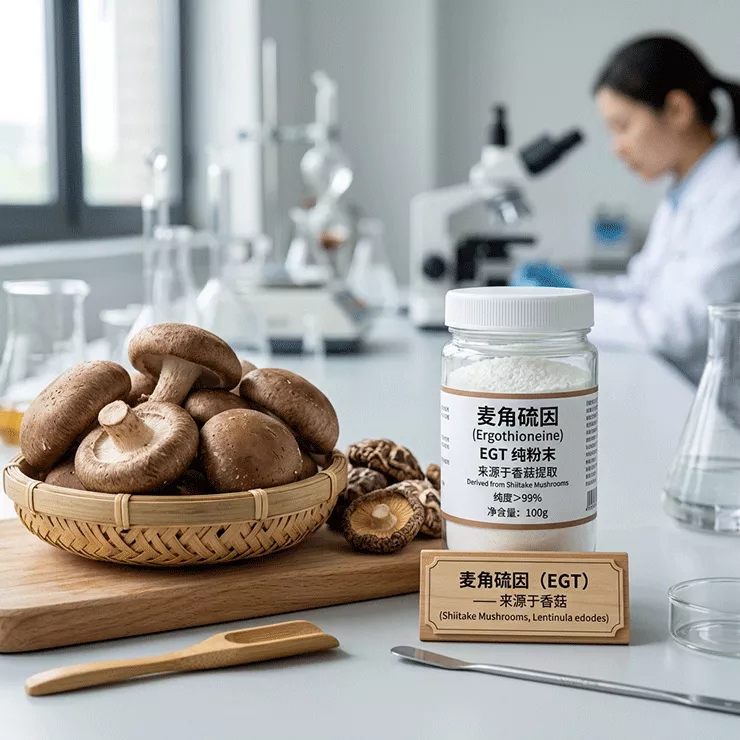
Why Shiitake Mushroom Extract Is the Real Story Behind the Ergothioneine Boom
If you’ve been following the supplement industry lately, you’ve probably noticed a new star player: ergothioneine. Marketed as the “longevity vitamin” or the “master antioxidant,” this naturally occurring amino acid is generating serious buzz. But here’s what many brands aren’t telling you—when it comes to sourcing high-quality ergothioneine for wholesale, the source matters just as much as the molecule itself.
And that source, more often than not, is the humble shiitake mushroom.
What Makes Shiitake-Derived Ergothioneine Different?
Ergothioneine is unique among antioxidants. Unlike vitamin C or glutathione, your body has a specialized transporter—OCTN1—dedicated to shuttling ergothioneine into cells, particularly into tissues prone to oxidative stress like the liver, eyes, and skin. This suggests nature intended this compound to play a serious protective role.
But here’s the catch: humans don’t synthesize ergothioneine. We have to get it from food. And among all dietary sources, mushrooms—particularly shiitake—are the undisputed champions.
Scientific research confirms that shiitake mushroom (Lentinula edodes) produces some of the highest concentrations of ergothioneine among edible fungi. When manufacturers extract ergothioneine directly from shiitake mycelia or fruiting bodies, they’re not just isolating a single compound—they’re capturing it in its natural context, often alongside complementary phytonutrients that may enhance its bioavailability and stability.
The Science Behind Quality Shiitake Ergothioneine
For wholesale buyers, not all shiitake extracts are created equal. The difference comes down to three key factors: source material, cultivation method, and extraction process.
Source Material Matters
Shiitake mushrooms grown in nutrient-rich conditions with optimal moisture, temperature, and light produce higher baseline levels of ergothioneine. Reputable suppliers work with trusted farms that prioritize these variables. But there’s another layer: some manufacturers use submerged fermentation of shiitake mycelia rather than waiting for full fruiting bodies to develop.
Research published in Food Chemistry shows this approach can actually enhance ergothioneine production. By optimizing the culture medium—particularly supplementing with fructose, aspartic acid, and methionine—scientists have achieved ergothioneine yields up to 3.45 mg per gram of dry weight, significantly higher than what occurs naturally. This method also shortens production time and reduces contamination risk, making it both efficient and scalable for wholesale manufacturing.
Extraction and Purity Standards
The extraction process itself determines the final product’s purity, potency, and safety. Solvent extraction, enzymatic methods, and supercritical fluid extraction each yield different results. Supercritical CO₂ extraction, for instance, is increasingly favored for its clean profile and ability to preserve the integrity of the ergothioneine molecule without leaving chemical residues.
Wholesale buyers should look for suppliers who conduct rigorous testing for heavy metals, pesticides, and microbial contaminants. Certifications like organic, non-GMO, and kosher or halal compliance also matter for brands targeting specific consumer demographics.
What to Look for in a Shiitake Ergothioneine Supplier
The wholesale supplement market has no shortage of suppliers claiming to offer premium ergothioneine. But if you’re sourcing specifically shiitake-derived material, here are a few practical considerations:
Concentration and standardization. Some suppliers offer crude mushroom powders; others provide standardized extracts with guaranteed ergothioneine content. For most supplement formulations, standardized extracts offer more predictable dosing and better consumer outcomes.
Manufacturing transparency. Suppliers who openly discuss their cultivation methods, extraction technologies, and quality control protocols are generally more reliable than those who don’t. Shaanxi Yuantai Biological Technology Co., Ltd., for example, emphasizes its use of meticulously sourced mushrooms and offers OEM customization for buyers.
Application expertise. The best suppliers understand that ergothioneine isn’t a one-size-fits-all ingredient. It appears in dietary supplements, functional foods, and increasingly in anti-aging skincare formulations. A supplier who can speak to stability, solubility, and formulation compatibility across these categories adds real value.
Why the Shiitake Connection Resonates with Consumers
From a branding perspective, shiitake-derived ergothioneine offers something that synthetic or biotech versions simply can’t match: a clean-label story. Consumers increasingly want to know where their ingredients come from, and “extracted from shiitake mushrooms” resonates far better than “produced via engineered yeast fermentation” or “chemically synthesized”.
This aligns with the broader movement toward whole-food-based supplements and functional ingredients. Mushrooms already enjoy a strong reputation in wellness circles, valued for immune support and adaptogenic properties. Adding ergothioneine to that narrative feels less like introducing a novel ingredient and more like highlighting a key component of something consumers already trust.
The Bottom Line for Wholesale Buyers
If you’re considering adding ergothioneine to your product line—whether in capsules, powders, or functional beverages—the shiitake-derived option deserves serious consideration. It combines scientific credibility with consumer appeal, and when sourced from a quality-focused supplier, it delivers consistent potency.
That said, not every supplier offering “shiitake extract” prioritizes ergothioneine content. Some focus on polysaccharides like beta-glucans, which offer different benefits. If ergothioneine is your target, make that explicit in your conversations with suppliers. Ask about their specific extraction methods, their typical yield per batch, and their testing protocols.
The ergothioneine trend isn’t going away. If anything, interest in this “longevity nutrient” is still in its early stages. For brands looking to enter the space, shiitake-derived material offers a compelling combination of natural origin, scientific backing, and marketability—all critical factors for building a product that stands out in an increasingly crowded wellness market.
pred 2 urama